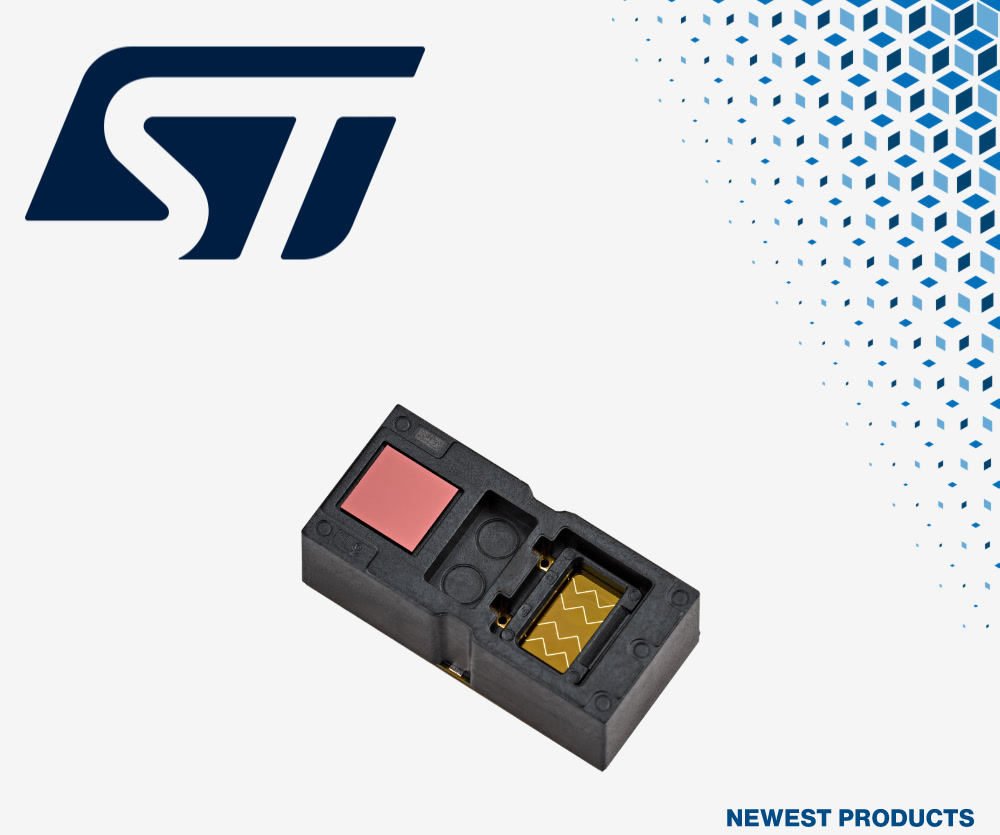

Energy from piezoelectric and thermoelectric inputs can be used to generate power for microcontrollers and wireless links to monitor and control equipment in industrial automation without batteries or power leads.
The industrial environment can be harsh, but this provides an ideal opportunity for harvesting energy from the surroundings to power sensors and wireless links. Being able to place sensors where they are needed without having to worry about cabling saves costs and allows equipment to be monitored more closely, reducing operating costs and allowing repairs and upgrades to be made in good time. Some forms of energy harvesting are not really suited to industrial automation while others thrive. Solar cells are not as efficient under industrial lighting, and the aim of industrial automation is to create a ‘lights out’ manufacturing floor, while the RF environment can be intermittent, ruling out these technologies. However, the higher temperature and the vibration – both of which are considered challenges to other systems – are ideal sources of energy for powering the sensors. The tough environment means there are significant design and packaging challenges that are more specific to industrial automation.
Vibrational energy
The Volture V25W from Midé (Figure 1) is a patented piezoelectric crystal in robust packaging aimed at harvesting energy from vibrations. It is hermetically sealed for use in harsh environments and so has all the leads attached without soldering to avoid a potential point of failure. It is available in different sizes to match to the specific application. A key advantage is that it can directly integrate with off-the-shelf products such as the Linear Technology LTC3588 power management IC and thin film batteries to make the system integration simpler.


Figure 1: The Midé V25W piezoelectric transducer.
It is aimed specifically at industrial health monitoring network sensors and maintenance sensors, as well as wireless High Voltage Air Conditioning sensors. Being able to monitor the status of the HVAC is vital to ensure that the temperature on the factory floor is tightly controlled.
The best way to use the device is to mount it in a cantilevered configuration on the vibration source and tune the natural frequency of the crystal to match that of the vibration source. To do this, one must understand the vibration environment in which the device is operating, which can be done with an accelerometer to capture the vibration data, and by performing an FFT (Fast Fourier Transform) on the data to extract the relevant frequency information. Some applications will not require this step as the dominant frequencies are inherently known, such as a 120 Hz AC motor or a 60 Hz appliance. However, most applications will require some form of vibration characterization.
To take advantage of resonant beam harvesting to harvest the most energy, both the base and clamp are constructed of rigid materials completely free of burrs and defects. Using a rigid material will minimize dissipation of energy through the clamp structure and avoiding burrs and defects will minimize the potential for stress concentrations on the device, which could lead to premature failure.
The clamp should completely extend beyond the piezo element within the device and, for reliable long term installation, the fasteners securing the clamp should be properly torqued and should be reinforced either using lock washers or some kind of locking adhesive. Straight clamps are the simplest and often most cost effective clamps, but curved clamps can slightly increase performance of the transducer and provide a bit more energy to the sensor and wireless link.
The device is tuned by adding a mass to the end of the cantilevered device until the natural frequency of the piezo beam is the same as the vibration source. The larger the tuning mass, the lower the natural frequency of the Volture. For non-permanent installations or for active tuning, it is best to use bee’s wax or some other form of non-permanent attachment for the tuning mass. This allows the mass to be moved along the beam for tuning.
There are multiple means of tuning the device depending on the equipment available to the user. An oscilloscope can be connected directly to two of the output pins or through whatever electronics the user is using as long as the electronics allow the output power to be measured. The tuning mass can then be adjusted until the maximum power is achieved.
Another simple way to tune the V25W is to measure the frequency at which the device "rings out" when excited by an impulse mechanical load. The easiest way to do this is to attach one of the piezo crystal pins (P1 and P2) directly to an oscilloscope for monitoring and add the tip mass. An impulse mechanical load can be applied by simply flicking the end of the device with a finger, which will cause the cantilever beam to "ring." The frequency of the decaying wave is the natural frequency to which the device is tuned. This can be changed by moving the mass further away from the clamp point to decrease the frequency or by moving it closer to increase the frequency. However, if the natural frequency is not close to the desired frequency, either a different tip mass or a different product may be required.
The power output capability of the V25W was measured using this technique on a vibration platform, or shaker, with tip masses to change the natural frequency. The frequency of the shaker was then matched to the device to provide the optimum energy harvesting. Four different amplitudes were tested (0.25, 0.375, 0.5, and 1.00 g) at each of these frequencies and the piezo’s output was rectified and then placed across a purely capacitive load.
Figure 2 shows the voltage (operating voltage) on the capacitor and instantaneous power into capacitor vs. time for a representative vibration level and frequency, demonstrating that the power increases until it peaks when the operating voltage is at about half its open circuit value. After that, it decreases.

Figure 2: The operating voltage on the capacitor and instantaneous power into capacitor vs time for a representative vibration level and frequency.
Power management
The V25W also interfaces directly to Linear Technology’s LTC3588 (as in Figure 3). This is an ultra-low quiescent current power supply designed specifically for energy harvesting applications. This rectifies a voltage waveform and stores the harvested energy on an external capacitor, bleeding off any excess power via an internal shunt regulator. It also provides a regulated output voltage via a nanopower high efficiency synchronous buck regulator.

Figure 3: Using the Mide V25W as a vibrational energy harvester to power a wireless sensor.
The LTC3588 gathers energy and converts it to a useable output voltage to power any type of electronic system. Some applications may require more peak power than a typical piezo can produce, so the IC accumulates energy over a longer period to enable efficient use for short power bursts, for example to send a short radio pulse with sensor data. The frequency of bursts allowed is directly proportional to the power coming in from the piezo, and the total energy per burst.
The values of the input and output capacitors depend on the energy needs and load requirements of the application. For 100 mA or smaller loads, storing energy at the input takes advantage of the high voltage input as the buck converter on the chip can deliver an average 100 mA current efficiently to the load. The input capacitor should then be sized to store enough energy to provide output power for the length of time required, while also not dropping to the under-voltage lockout falling threshold (UVLO falling). This threshold is approximately 300 mV above the selected regulated output.
The buck converter is also optimized to work with an inductor in the range of 10 μH to 100 μH. A value of 10 μH is adequate for space-limited applications, but 100 μH may provide greater efficiency, particularly as the ratio between input and output voltage increases. The inductor should also have a DC current rating greater than 350 mA as lower values can reduce the efficiency of the buck converter.
Thermal energy
The EDK352 from EnOcean (Figure 4) provides a Peltier effect transducer to use thermal energy to generate the power to drive an RF link. Operation typically starts at 20 mV from a two-degree temperature difference with a standard low-cost Peltier element.

Figure 4: The EnOcean EDK352 thermal energy evaluation kit.
The output power is in the range from μW to mW and depends on the actual temperature difference at the Peltier element. To achieve the best generator efficiency, the output voltage is lightly regulated. An input of 20 mV to 50 mV corresponds to an output voltage range between 3 V to 4 V.
The kit is aimed at wireless sensors for building and industrial automation such as temperature sensors, process control and preventive maintenance as well as controlling and monitoring water valves, air flaps and other mechanical devices.
Evaluation kits
For evaluating a complete energy harvesting system, the Cymbet CBC-EVAL-09 (Figure 5) is a universal energy harvesting (EH) evaluation kit that combines any one of multiple EH transducers with the EnerChip Energy Processor and 100 µAh solid state battery module. It ships with a solar cell for initial evaluation kit testing but can be used with piezo or pyroelectric transducers for harvesting vibrational or thermal energy from a single input. If two piezo electric beams are mechanically coupled together in the same transducer unit to get a higher power output, the two can be connected to separate pins.

Figure 5: The Cymbet EVAL-09 energy harvesting evaluation system.
The EVAL-09 can supply hundreds of microwatts of continuous power to the load but applications operating with radios and microcontrollers typically need tens to hundreds of milliwatts under peak load conditions. The difference can be addressed by limiting the amount of time the load is powered and waiting sufficient time for the energy harvester to replenish the energy storage device before the subsequent operation commences. In a typical remote RF sensor application, the ‘on’ time will be on the order of 5-20 ms, with an ‘off’ time of several seconds to several hours depending on the application and available energy source. The duty cycle is an important consideration when designing a wireless system. While it is relatively straightforward to calculate a power budget and design a system to work within the constraints of the power and energy available, it is easy to overlook the power required to initialize the system to a known state and to complete the radio link with the host system or peer nodes in a mesh network. The initialization phase can sometimes take two to three times the power needed for steady state operation.
Ideally, the hardware should be in a low power state when the system power-on reset is in its active state. If this is not possible, the microcontroller should place the hardware in a low power state as soon as possible.
After this is done, the microcontroller should be put into a sleep state long enough for the energy harvester to replenish the storage device. If the power budget is not exceeded during this phase, the system can continue with its initialization. The designer needs to be careful to ensure that the amount of time the system is on during this phase does not exceed the power budget, and several sleep cycles might be needed to ‘stair step’ the system up to its main operational state.
In most system power budgets, the peak power required is not as critical as the length of time the power is required. Careful selection of the message protocol for the RF link can have a significant impact on the overall power budget. In many cases, using higher power analog circuits that can be turned on, settle quickly, and can be turned off, can decrease the overall energy consumed.
The microcontroller clock frequency can also have a significant impact on the power budget. In some applications it might be advantageous to use a higher microcontroller clock frequency to reduce the time the microcontroller and peripheral circuits are active. Avoid using circuits that bias microcontroller digital inputs to mid-level voltages; this can cause significant amounts of parasitic currents to flow.
The EVAL-09 uses a Seiko S-882Z24-M5T1G charge pump to accumulate energy at startup and then dumps this energy into the CBC915 energy processor. Once the processor starts up, it automatically disables the Seiko charge pump and operates a more efficient inductive boost converter.
The length of time the CBC915 takes to find the maximum peak power point is largely influenced by the stability of the input signal generated by the energy harvesting transducer. Mechanical transducers tend to have the most electrical input noise and consequently take the most time for the processor to find the maximum peak power point. After the first time it finds the maximum peak power point, the coefficients used to find the point are stored in memory to use. It will not try to find the maximum peak power point again unless the system falls out of voltage regulation or is reset by a microcontroller.
For sporadic sources of energy, the EH4205 micropower booster module from Advanced Linear Technology can help. This is a self-powered voltage-booster module that converts a low DC voltage input from thermoelectric or electromagnetic generators to a higher AC or DC voltage output suitable for many low-power energy-harvesting applications. The EH4205 does not need a separate power supply to operate and derives its power directly from the low input voltage source. It draws input power levels starting at as low as 200 µW, which enables an on-board self-starting oscillator.
Conclusion
Vibrational and thermal energy are two key sources for powering the latest sensors with wireless network links, but the design requires careful consideration to use the power budget effectively. With the right combination of components and a good system design, industrial automation developers can use self-powered modules for a wide range of control and monitoring applications. Using the evaluation kits allows the different technologies to be evaluated and tested to ensure they can meet the system requirements.